
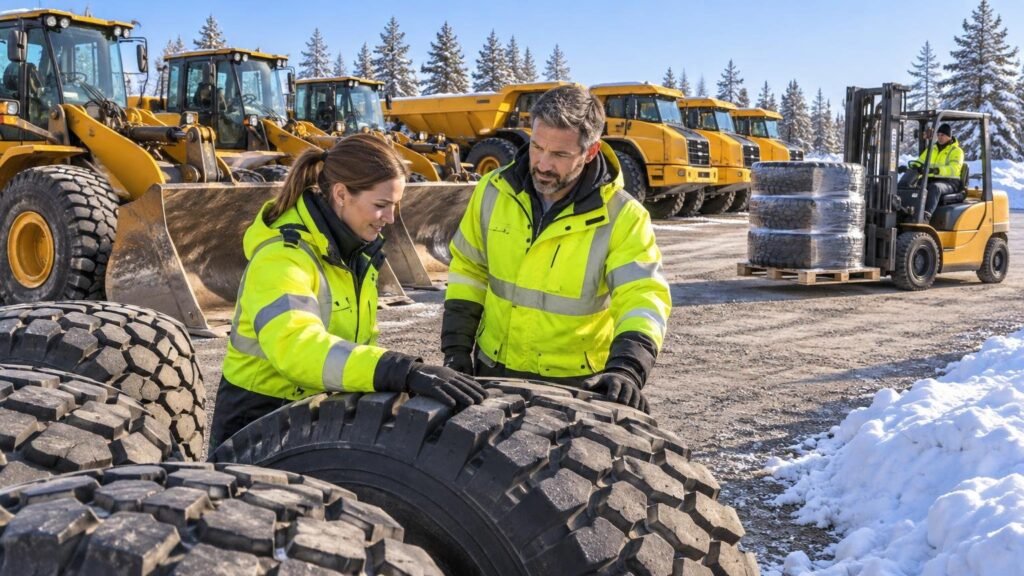
Keep Winter Jobs Moving Before Conditions Tighten
Winter tire planning should begin before the first serious weather delay puts equipment on hold. Mud, snow, frozen ground, road salt, and shorter workdays can turn a routine tire purchase into a costly jobsite problem. We encourage fleet managers, contractors, and equipment operators to treat tire sourcing as part of their larger winter readiness plan.
Poor tire readiness can affect far more than one machine. When tires lose traction or fail under demanding conditions, we often see delays spread across the whole worksite. Material deliveries may arrive late, access roads may become unsafe, fuel use can rise, and equipment may sit idle while a replacement is found.
November is often a turning point. Some regions are already dealing with winter weather, while demand for replacement tires starts to rise. At the same time, production schedules, port activity, customs clearance, and local freight delivery can become less predictable. Planning early gives you more room to match products to your equipment instead of settling for whatever is available.
For larger orders, working with a bulk off-road tire supplier can also simplify the bigger picture. We can help wholesale buyers consider product documentation, container planning, export paperwork, and shipment coordination alongside the tire order itself.
Match Tire Specifications to Winter Site Hazards
No single tread pattern is right for every winter jobsite. The best fit depends on your equipment, the surface underfoot, the loads being carried, weather exposure, and how far the machine travels between locations. Before selecting tires, we recommend reviewing where and how each vehicle will work.
A loader moving through wet clay has different needs than a skid steer operating on packed snow. A support pickup that moves between public roads and rough access routes may need a different balance than equipment that stays on site all day.
Consider the conditions your fleet will face:
- Mud and wet clay may call for tread designs that shed material effectively.
- Snow and icy access roads place greater focus on traction and controlled handling.
- Loose aggregate and sharp debris can increase the need for durable sidewalls.
- Frozen terrain can create hard impacts and uneven surfaces.
- Road salt and standing water make regular inspections more important.
Fitment details matter just as much as tread style. We encourage buyers to confirm tire size, rim compatibility, load rating, ply rating, speed needs, axle position, equipment type, and expected operating hours. It also helps to separate tires used mainly on site from those that will regularly travel on public roads.
Winter safety and compliance should be part of the review, too. Before importing or deploying tires, you should verify applicable regional standards, required markings, and product certifications. In areas where snow service is common, match the tire’s intended performance and tread pattern to local requirements and jobsite conditions.
Verify Your Bulk Off-Road Tire Supplier Before Ordering
A low unit quote does not tell you whether a supplier can support a winter project from order placement through final delivery. We believe a dependable supplier should provide clear specifications, realistic production information, and paperwork that supports the destination market.
Start by requesting product information before committing to a large order. Specification sheets, size and load details, certification records, quality control information, and available warranty terms can help your purchasing team make a better comparison. These documents also help confirm that the tires suit your equipment and intended use.
Supply capacity deserves a direct conversation. Mixed fleets may need tires for loaders, skid steers, trailers, pickups, and other support vehicles, often in several sizes. Your supplier should be prepared to discuss minimum order quantities, mixed container options, available sizes, lead times, and a plan for future replacement tires.
Clear communication is especially helpful when products are crossing borders. We recommend confirming the shipping terms and asking what export documents will be prepared. Commercial invoices, packing lists, certificates of origin when needed, and other records can all support a smoother customs process.
Plan Container Deliveries Around Winter Lead Times
Factory-direct bulk purchasing works best when you allow time for every stage between production and jobsite delivery. A winter order may involve scheduling, quality checks, container loading, export paperwork, transport, customs processing, port handling, and domestic freight. Any one of those steps can affect your required arrival date.
Forecasting demand before inventory becomes urgent gives your team better choices. Review past tire use, planned winter projects, equipment additions, and likely replacements. This can help you order the right quantities and avoid an emergency purchase that leaves you with mismatched tires or an incomplete set.
A practical planning review may include:
- High-use tire sizes already in your fleet
- Equipment scheduled for winter projects or extended hours
- Tires nearing the end of their service life
- Destination ports and final delivery locations
- The date when inventory must be on hand, not merely shipped
Container planning is another reason supplier selection matters. We can support container-load planning and international shipping coordination, helping you consolidate products and prepare the documentation needed for shipment. With a clearer replenishment schedule, your team can focus on the work ahead instead of reacting to shortages.
Protect Fleet Uptime After Tires Reach the Jobsite
Delivery day is not the end of winter tire planning. The way your team receives, stores, mounts, and maintains tires can shape how well that inventory supports the fleet throughout the season.
At receiving, inspect the order before it goes into storage. Confirm quantities, sizes, visible condition, product markings, and shipping documents. If something does not match the order, document it promptly so the issue can be reviewed while the shipment details are still clear.
Winter storage also deserves attention. Keep tires away from standing water, direct heat sources, petroleum products, sharp debris, and damaging exposure. Temperature swings can affect inflation pressure, so we recommend more frequent pressure checks during cold periods. Tracking tread wear, sidewall damage, punctures, and service intervals can also reveal recurring hazards on a particular route or jobsite.
A reserve inventory of high-use sizes can prevent a minor failure from turning into a multi-day equipment delay. When maintenance teams know which tires are most likely to be needed, they can plan replacements before the work schedule is disrupted.
Build Your Winter Tire Supply Plan with Sentury Tyres
Before requesting pricing, organize your equipment list, tire specifications, required quantities, destination port, and preferred delivery timeline. We support dealers, distributors, and fleet operators with truck, passenger, and off-road tire products, factory-direct bulk pricing, export documentation, container-load support, and international shipping coordination.
The strongest winter tire plan is one built around real site conditions, realistic lead times, and the equipment your crews depend on every day. Confirm the details early, keep records organized, and maintain enough replacement inventory to keep weather from setting the pace of your work.
Keep Your Winter Fleet Ready to Work
At Sentury Tyres, we help crews source OTR tires that match demanding equipment and changing jobsite conditions. Review our options from a bulk off-road tire supplier to support dependable winter operations. For help selecting the right tire quantities and specifications, contact us today.
